
Gold, silver down as lingering war prospects hint of less demand
Gold and silver prices are lower in midday U.S. trading Monday but up from daily lows. The prospects have dimmed regarding an end to the U.S.-Iran war soon. Once again, gold traders on this day are focused more on the bearish aspects of the war denting consumer and commercial demand for metals, amid likely resulting slowing economies and tighter monetary policies--and less on the bullish uptick in risk aversion in the general marketplace that has in the past supported safe-haven buying of gold and silver. June gold was last down $62.00 at $4,817.60. May silver prices were down $2.007 at $79.835.
Iran wavered on whether to send diplomats to Pakistan for a second round of peace talks after the U.S. maintained a blockade of the Strait of Hormuz and seized an Iranian ship, dimming hopes of a breakthrough in efforts to end the war.
The cumulative global economic impact of seven weeks of war in the Middle East will begin to emerge this week, in a second round of business surveys from multiple countries. “Whether the twin blows affecting growth and inflation seen in purchasing manager indexes after the first month of the Iran conflict intensified during month two will be a key focus. The initial take for April in economies from Australia to the U.S. will be published on Thursday. Indexes in Germany, France, the euro zone and the UK are all anticipated to show broad deterioration, while the American indicators are seen little changed,” said a Bloomberg report. “Ultimately, the numbers may point to the degree that stagflation is lurking. That ominous term — evoking the noxious mix of surging prices and stalling growth of the 1970s.” Even if the war ends tomorrow, it would take quite some time for the recovery to kick in, said IMF Managing Director Kristalina Georgieva to Bloomberg. This week’s major U.S. economic data release will be retail sales. Economists project a sizable jump in overall sales for March, largely due to sharply increased spending on gasoline. The International Monetary Fund has trimmed its global growth forecast for 2026 due to the oil-price shock from war in the Middle East. The IMF sees the world economy expanding 3.1% this year, down from a January forecast of 3.3%, and raised its inflation estimate due to higher energy and food prices.
The key outside markets see Nymex WTI crude oil prices solidly up and trading around $89.00 a barrel. The U.S. dollar index is a bit firmer. The yield on the benchmark 10-year U.S. Treasury note is presently around 4.25 percent.
Note: The gold market operates through two primary pricing mechanisms. The first is the spot market, which quotes prices for on-the-spot purchase and immediate delivery. The second is the futures market, which sets prices for delivery at a future date. Due to year-end positioning market liquidity, the December gold futures contract is currently the most actively traded on the CME.
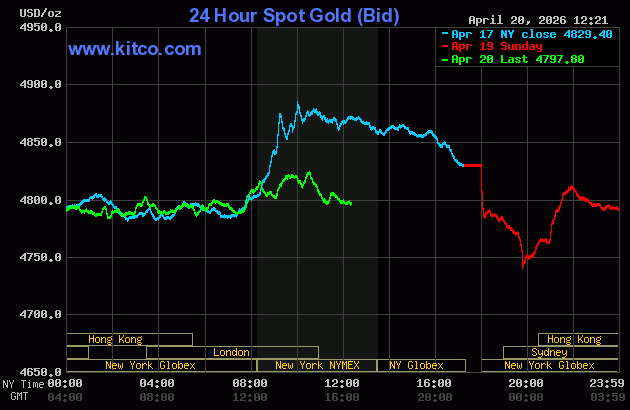
Technically, June gold futures bulls’ next upside price objective is to produce a close above solid resistance at $5,000.00. Bears' next near-term downside price objective is pushing futures prices below solid technical support at $4,500.00. First resistance is seen at the overnight high of $4,834.50 and then at $4,900.00. First support is seen at the overnight low of $4,752.00 and then at $4,700.00. Wyckoff's Market Rating: 6.0.
May silver futures bulls see their next upside price objective for the bulls is closing prices above solid technical resistance at $85.00. The next downside price objective for the bears is closing prices below solid support at $70.00. First resistance is seen at the overnight high of $80.755 and then at last week’s high of $83.245. Next support is seen at $77.00 and then at $75.00. Wyckoff's Market Rating: 6.0.